The New York Public Library in December announced a new partnership with nonprofit Benetech, and the organization’s Bookshare solution, to provide print disabled patrons with access to more than 370,000 accessible ebooks through NYPL and the Heiskell Braille and Talking Book Library. Although Bookshare provides free access to its collection for all U.S. students with qualifying disabilities through an award by the U.S. Department of Education’s Office of Special Education Programs, access to the collection for qualifying adults, seniors, and other non-students generally requires payment of a $25 setup fee and a $50 annual subscription fee. The partnership to provide free access to library patrons through NYPL is Bookshare’s first such partnership with a U.S. library, and Benetech officials have stated that the organization is hoping to establish similar agreements with public libraries throughout the U.S.
NYPL, Benetech Partner to Offer 370,000 Accessible Ebooks to Print Disabled
The New York Public Library in December announced a new partnership with nonprofit Benetech, and the organization’s Bookshare solution, to provide print disabled patrons with access to more than 370,000 accessible ebooks through NYPL and the Heiskell Braille and Talking Book Library. Although Bookshare provides free access to its collection for all U.S. students with qualifying disabilities through an award by the U.S. Department of Education’s Office of Special Education Programs, access to the collection for qualifying adults, seniors, and other non-students generally requires payment of a $25 setup fee and a $50 annual subscription fee. The partnership to provide free access to library patrons through NYPL is Bookshare’s first such partnership with a U.S. library, and Benetech officials have stated that the organization is hoping to establish similar agreements with public libraries throughout the U.S.
The Oldest Internet Publication You’ve Never Heard Of
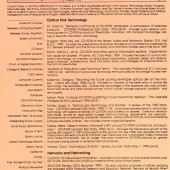
Twenty-five years ago I started a library current awareness service called Current Cites. The idea was to have a team of volunteers monitor library and information technology literature and cite only the best publications in a monthly publication (see the first page of the inaugural issue pictured). Here is the latest issue. TidBITS is, I […]
Ebook Vendors Anticipate Big Five Licensing Terms Becoming More Flexible
After years of expressing concern about the potential impact that library lending might have on consumer sales, major publishers have good cause to take another look at the library market for ebooks, according to executives from library ebook distributors OverDrive, 3M, and Baker & Taylor. With consumer sales growth slowing, bolstering institutional sales will likely become more of a priority for major publishers. OverDrive CEO Steve Potash noted that publishers, like all for-profit companies, are always looking for growth, and “there’s still a lot a growth in institutions, and there [are] significant opportunities for growth in education…. If retail is flattening, you have to experiment.”
U. Minnesota Press, CUNY Grad Center Develop Hybrid Publishing Platform
The University of Minnesota Press and the GC Digital Scholarship Lab at the Graduate Center of the City University of New York (CUNY) in April were awarded a $732,000 grant from the Andrew W. Mellon Foundation to launch Manifold Scholarship, a new platform that will enable the publication of iterative, networked, electronic versions of scholarly monographs alongside the print edition of the book.
U. Minnesota Press, CUNY Grad Center Develop Hybrid Publishing Platform
The University of Minnesota Press and the GC Digital Scholarship Lab at the Graduate Center of the City University of New York (CUNY) in April were awarded a $732,000 grant from the Andrew W. Mellon Foundation to launch Manifold Scholarship, a new platform that will enable the publication of iterative, networked, electronic versions of scholarly monographs alongside the print edition of the book.
ProQuest Acquires MyiLibrary and OASIS
ProQuest today announced that it has signed an agreement to acquire Coutts Information Services from Ingram Content Group, including the MyiLibrary platform and the Online Acquisitions and Selection Information System (OASIS). In addition to augmenting ProQuest’s selection of ebooks with MyiLibrary’s 250,000 titles, a larger plan involves leveraging Coutts’ collection-building expertise, approval support, and ordering tools to begin developing a fully integrated service that streamlines the acquisition and fulfillment of print and electronic content together.
ProQuest Acquires MyiLibrary and OASIS
ProQuest today announced that it has signed an agreement to acquire Coutts Information Services from Ingram Content Group, including the MyiLibrary platform and the Online Acquisitions and Selection Information System (OASIS). In addition to augmenting ProQuest’s selection of ebooks with MyiLibrary’s 250,000 titles, a larger plan involves leveraging Coutts’ collection-building expertise, approval support, and ordering tools to begin developing a fully integrated service that streamlines the acquisition and fulfillment of print and electronic content together.
DBW 2015: Amazon, Publishers Look to Ebook Subscription Services as Discovery Platform

Officials at Amazon believe subscription-based ebook consumption is an inevitability, and will continue to invest in and build the company’s Kindle Unlimited service as part of an effort to stay ahead of the emerging trend, Russ Grandinetti, senior VP, Kindle, at Amazon explained during a candid general session interview on January 14 at the Digital Book World Conference and Expo 2015. In a separate panel, publishers expressed enthusiasm for Oyster and Scribd as discovery platforms.
SELF-e Comes to Cuyahoga | Self-Publishing and Libraries

SELF-e is the partnership between Library Journal and Charleston, SC’s BiblioLabs. A BiblioLabs product, Biblioboard, is a platform that seeks to bring (among other things) self-published works into the library ecosystem. I spoke recently with Hallie Rich, Cuyahoga County Public Library’s communications and external relations director, about the library’s pilot project with the platform.