As President Obama ponders his choice for the next Librarian of Congress, the first time in nearly three decades that such a nomination will be necessary, the U.S. Senate has passed a bill to put a 10-year term on the position, stripping the job of the lifetime tenure it has carried since 1802.
Barriers to Innovation Act Would Renew DMCA Exemptions Automatically
By on April 27, 2015
Senator Ron Wyden (D-OR) and Representative Jared Polis (D-CO) on April 16 introduced the “Breaking Down Barriers to Innovation Act,” a bill that would make significant changes to Section 1201 of the Digital Millennium Copyright Act (DMCA), which gives the Library of Congress the power to grant exemptions to DMCA’s ban on circumventing digital rights management (DRM) software, encryption, or other digital restrictions.
Barriers to Innovation Act Would Renew DMCA Exemptions Automatically
By on April 27, 2015
Senator Ron Wyden (D-OR) and Representative Jared Polis (D-CO) on April 16 introduced the “Breaking Down Barriers to Innovation Act,” a bill that would make significant changes to Section 1201 of the Digital Millennium Copyright Act (DMCA), which gives the Library of Congress the power to grant exemptions to DMCA’s ban on circumventing digital rights management (DRM) software, encryption, or other digital restrictions.
Barriers to Innovation Act Would Renew DMCA Exemptions Automatically
By on April 27, 2015
Senator Ron Wyden (D-OR) and Representative Jared Polis (D-CO) on April 16 introduced the “Breaking Down Barriers to Innovation Act,” a bill that would make significant changes to Section 1201 of the Digital Millennium Copyright Act (DMCA), which gives the Library of Congress the power to grant exemptions to DMCA’s ban on circumventing digital rights management (DRM) software, encryption, or other digital restrictions.
Hachette To Donate Audiobooks to National Library Service for the Blind and Physically Handicapped
By on May 30, 2013
Hachette Book Group on May 29 announced plans to provide unabridged audiobook recordings for free to the National Library Service for the Blind and Physically Handicapped (NLS), a division of the Library of Congress (LOC). Select backlist and new titles, including new releases, will be available through NLS’s Talking Books program by the end of 2013
Library of Congress: Cell Phone Unlocking Should Not Be A DMCA Exemption Issue
By on March 5, 2013

This week, the Library of Congress (LC) argued that the legality of unlocking cellphones is not an issue that should be decided using the library’s power to grant Digital Millennium Copyright Act exemptions.
Sequester Will Force Tech Investment Cutbacks at GPO, IMLS
By on February 27, 2013

The pending federal budget sequestration could cut the appropriations budget of the Government Printing Office by 5.3%, or approximately $6.7 million. In addition, the GPO is expecting that the sequester will force other federal agencies to cut back on ordering printing and information services from the GPO, which would also lower the agency’s revenue.
The Library of Congress and CLIR Release National Recording Preservation Plan
By on February 13, 2013
From a LC Announcement: The Library of Congress today unveiled “The Library of Congress National Recording Preservation Plan,” a blueprint for saving America’s recorded sound heritage for future generations. The congressionally mandated plan spells out 32 short- and long-term recommendations involving both the public and private sectors and covering infrastructure, preservation, access, education and policy […]
Library of Congress Announces Modeling Initiative
By on May 24, 2012
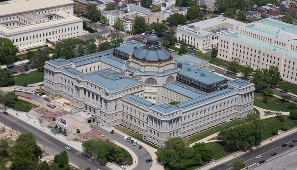
The Library of Congress has contracted with Zepheira, a semantic web development company, to accelerate the launch of its Bibliographic Framework Transition Initiative (BFTI). A major goal of BFTI is to replace the MARC 21 exchange format with a new Linked Data model.
Charleston Conference 2011: Big Ideas, Big Challenges
By on November 8, 2011
This year at the Charleston Conference—the annual meeting of academic acquisitions librarians and library vendors held in Charleston, SC, from November 2 to 5—many of the plenary presentations shared a common theme: as libraries face new challenges, new ideas are needed. And as the main speakers and presenters touched on a wide range of issues, it became clear that there was no shortage of new ideas, and opinions, in the library world.