
Libraries and schools applying for E-Rate’s Wi-Fi program have an extra $1.5 billion of funds to tap until the March 26 deadline. Here are some tips and tools to maximize your application.
On Libraries and New Media, powered by Library Journal and School Library Journal
Libraries and schools applying for E-Rate’s Wi-Fi program have an extra $1.5 billion of funds to tap until the March 26 deadline. Here are some tips and tools to maximize your application.
Ninety-five percent of public libraries currently offer ebooks to patrons, up from 72 percent in 2010, and 89 percent in both 2012 and 2013. However, money remains the biggest impediment for libraries looking to add ebooks or expand collections, according to Library Journal’s fifth annual Ebook Usage in U.S. Public Libraries report, sponsored by Freading. The growth in demand for ebooks has cooled during the past four years, although as the report notes, this “is only because [ebooks] have become less of a novelty and more mainstream.”
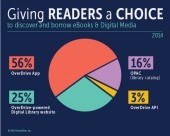
OverDrive is currently processing 350 million API server calls per month, and has supported 1.3 million checkouts via APIs to date in 2014, according to internal data given to LJ. API use has also risen steadily each quarter, with almost 233,000 checkouts during the first three months of the year, more than 529,000 in Q2, an estimated 692,000 in Q3, and a projection of at least 1 million during the final three months of the year.

The Westport Library’s ongoing efforts to support its Maker Space, including Maker in Residence programs and the recent acquisition of two programmable robots, have helped establish a virtuous cycle in which residents have begun working on their own projects and helping one another independently.
Adobe this week confirmed reports that it has been logging data on the reading activity of people who use the free Adobe Digital Editions service, and that the company has been transmitting those logs to its servers as unencrypted text files, raising privacy and security concerns.
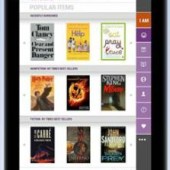
When superstorm Sandy hit the east coast in October 2012, the Queens Library (QL) in New York was among many northeastern library systems affected. QL persevered, continuing to offer crucial services in storm-ravaged communities while rebuilding damaged branches. The system also managed to turn a generous corporate donation into an innovative new platform for tablet computers, enabling a tech lending program that has since continued to grow.

The Massachusetts State Ebook Project (MA EBook Project), conceived by the Massachusetts Board of Library Commissioner’s (MBLC) Statewide Resource Sharing Committee and the Massachusetts Library System (MLS), with funding from the Institute of Museum and Library Services (IMLS), this summer concluded a pilot program, offering many insights into the challenges and promises that statewide consortial ebook lending programs may offer.
The following is an excerpt from Digital Literacy and Digital Inclusion: Information Policy and the Public Library (Rowman & Littlefield, Aug. All rights reserved.) Federal policies in the United States rely on public libraries to promote digital literacy and digital inclusion. Yet, public libraries are predominantly excluded from the funding made available for digital literacy and digital inclusion, as well as from the decision-making processes.
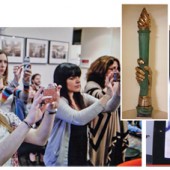
In early April 2013, digital journalism professor Robert Hernandez, of the University of Southern California (USC) Annenberg School for Communication and Journalism, Los Angeles, was driving by L.A.’s Central Library downtown while thinking of ideas for his experimental augmented reality (AR) storytelling and journalism course when he had an aha moment: Why not focus a project on augmenting the Central Library?
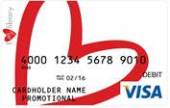
Following four months of discussions with SirsiDynix and a brief pilot test this summer, Maryland’s Frederick County Public Libraries (FCPL) on September 5 officially launched the “I Love My Library” prepaid Visa debit card. Developed by SirsiDynix in partnership with Visa and Card Limited, the new affinity cards double as a patron’s library card and aim to help libraries achieve three goals.